Woodland Hills looks straightforward on a map, but anyone who has moved here knows the neighborhood has its own logistics. Hilly streets meet narrow driveways. Some apartment buildings have strict elevator windows. Parking permits matter, and so do fire lanes on hot days when brush crews patrol the canyon edges. Choosing between local and long distance movers isn’t just about mileage, it’s about matching the job to a team that knows how to navigate the real frictions of Los Angeles life.
I’ve managed moves on both sides of the equation. A family relocating two miles from Calabasas into a mid-century in Walnut Acres ran longer than a couple who moved 900 miles to Santa Fe. The difference came down to prep, access, timing, and the mover’s scope. If you’re trying to decide whether to hire Local movers Woodland Hills or Long distance movers Woodland Hills, here’s how to think it through like someone who has loaded a truck on a 95 degree day with a city inspector circling the block.
What “local” really means in Woodland Hills
Within the moving industry, local typically refers to moves under 50 to 100 miles, billed hourly with a minimum, usually in a same-day or next-day window. For Woodland Hills, that means anywhere in the Valley and most of Los Angeles County. The advantage is familiarity. Local crews know where you can stage a 26-foot truck on Ventura Boulevard at 8 a.m., which buildings along Burbank Boulevard require a certificate of insurance, and how fast the 101 stacks up near Topanga Canyon after school drop off.
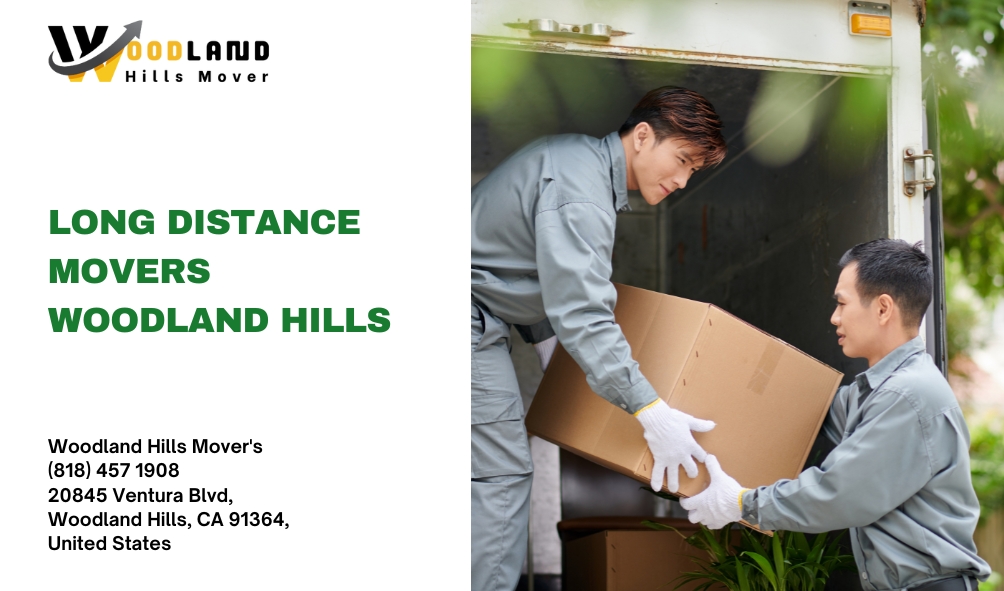
Local teams also tend to offer more flexible scheduling. If you need a split day to meet a utility installer at noon or a late start to avoid a homeowner association’s noise restrictions, a local company can adapt. They’ll send a foreman who has worked these streets before. When a move involves a tricky hillside driveway off De Soto, that familiarity saves time, and time is usually what you pay for on local contracts.
The drawback is that some local companies run lean on packing and specialty services. If you need export-grade crating for a Steinway or climate-controlled storage for six months, the average local crew may sub it out or stretch beyond their wheelhouse. You want to ask about experience and confirm that the same team who quotes the job is the one that will handle it.
What “long distance” entails beyond the miles
Long distance moving is typically any transfer that crosses state lines or exceeds the local radius. These jobs are priced by weight and distance, plus add-ons like shuttles, crating, and valuation coverage. The big shift is chain of custody. Your belongings leave your home, travel hundreds or thousands of miles, and arrive days or weeks later. Every handoff and timeline matters, especially when your delivery window needs to align with a cross-country closing date.
Long distance movers Woodland Hills bring infrastructure to the table: linehaul carriers, dispatch systems, verified scales, and drivers comfortable with weigh stations and DOT inspections. They know how to load for long rides across the Mojave and how to wrap for temperature swings. They carry the right valuation options and can explain actual cash value versus full value protection without hand-waving.
The trade-off is less spontaneity. Pickup and delivery dates are windows, not promises. On consolidated shipments your goods share space with other households, which keeps costs down but introduces variables. A stop in Phoenix can cascade into your Santa Fe delivery by a day. If you need guaranteed dates, you’ll pay for a dedicated truck or expedited service. It’s worth it sometimes, not always.

When a local move requires long distance thinking
Some Woodland Hills moves don’t look “long distance” on paper but benefit from long haul practices. A few patterns that stand out:
- Elevator or parking constraints that require a shuttle truck. If your building on Oxnard Street won’t allow full-size trucks in the alley, crews must shuttle items. That adds load points and increases the risk of damage. Treat it like a long distance load with a detailed inventory and custom padding. High-value items or delicate collections. Custom artwork, temperature-sensitive instruments, full-wall curio cabinets, or wine cellars deserve crating and climate awareness. A local company that can’t demonstrate crating experience might not be the right pick even for a five-mile move. Overlapping closings. If you need short-term storage between homes, you’re introducing a mini supply chain. Containers that remain sealed between load and unload lower risk. Ask for vault storage or portable containers that reduce rehandling.
In these cases, the best “local movers Woodland Hills” are the ones who handle the job as a small project rather than a quick haul. That subtle shift leads to better packing, clearer paperwork, and fewer surprises.
Cost dynamics: what drives the number up or down
People ask for Cheap movers Woodland Hills all the time, and there are honest ways to keep the bill reasonable. The trick is understanding what moves the dial.
For local moves, cost reflects labor hours, Office moving companies Woodland Hills truck time, and materials. An average two-bedroom apartment, lightly furnished, might take a 3-person crew 5 to 7 hours to load, drive, and unload, putting you in the mid-four figures after materials. Add stairs, long carries, or a tight truck approach and the hours climb. If you disassemble beds, empty dressers, and stage boxes near the door, you can shave an hour or more. The difference between wrapping a 10-drawer dresser with contents inside versus moving 10 loose drawers across a courtyard is real money.
For long distance moves, weight and distance are the primary levers. A 6,000-pound shipment from Woodland Hills to Portland will price differently than 6,000 pounds to Austin, but both are sensitive to inventory accuracy. Honest pre-move surveys matter. If you tell the estimator you have “about 60 boxes” and on load day the count is 120, the cost will increase, and the truck plan may buckle. Better to inventory once, then add a buffer of 10 to 15 percent.
Valuation coverage is another factor. Full value protection typically adds a percentage of the declared value. If you own a handful of high-value pieces, consider scheduled coverage or item-specific riders. It costs less than blanket coverage inflated to cover a few expensive items.
Timelines and reliability in a city that runs on windows
Move timing across Woodland Hills ties to constraints that outsiders underestimate. Utility shutoffs, freight elevators, parking enforcement, and school schedules all narrow the usable hours. For local moves, crews can plan around these windows, but they’ll also be managing LA’s traffic rhythm. A crew that leaves a Tarzana load at 2 p.m. risks hitting the worst of the 101. Good dispatchers keep moves within predictable zones to avoid bleeding hours into traffic.
Long distance scheduling has its own cadence. You’ll get a pickup date, then an estimated delivery spread. For trips under 1,000 miles, three to eight days is common once the truck rolls. Seasonal swings matter. June through August brings higher demand and tighter capacity. If you must move within that window, lock dates early and stay flexible with delivery spreads. It also helps to confirm daily driver communication. Some carriers update every morning by text, which makes planning easier when you’re coordinating with a building concierge in your destination city.
Permits, access, and the Woodland Hills specifics that trip people up
If your home sits off a canyon road, the question isn’t whether a big truck can reach your driveway, it’s what size can turn around at the top without backing into traffic. Crews will sometimes stage on a main road and shuttle with a smaller box truck. That requires a temporary no-parking permit from the city if street space is tight. For complexes along Ventura, dock reservations and certificates of insurance are standard. The better Local movers Woodland Hills handle the paperwork ahead of time and bring orange cones to hold curb space. Ask for this explicitly. When a truck spends 45 minutes circling for parking, you’re paying for that loop.
For long distance pickups, access matters even more because tractors and 53-foot trailers require clear routes and predictable space. If your street won’t accommodate them, the carrier will send a smaller truck for a shuttle. That adds both cost and time, and it affects the load plan. When an estimator visits, lead them to the tightest turn and the narrowest gate. If they say “we’ll figure it out” without measuring or checking overhead lines, find another company.
Packing: the point where good moves are won
Whether you hire a local crew for a same-day move or a long haul across state lines, packing quality dictates outcomes. In local jobs, people often try to save by self-packing. That can work if you use uniform boxes and pack tight. But I’ve watched well-intended DIY packing add two hours simply because of mixed box sizes and sagging bottoms. Professional packers bring speed, consistency, and protection. On short moves, it might be enough to have the crew pack the kitchen and art only, then handle the rest yourself. That hybrid approach minimizes breakage risk at the most vulnerable points.
For long distance, professional packing is worth strong consideration. The trip introduces repeated vibrations, especially on older interstate surfaces. Dish barrels, mirror cartons, and wardrobe boxes are designed for it. The pad wrap that works on a 2-mile ride to Warner Center is not what you want for a multiday haul through desert heat.
One practical trick applies to both: number and label your boxes by room, then mark a few as Open First. List what’s inside those on the flap. The morning after a move goes better if you can find clean sheets, a coffee maker, and a phone charger without tearing through 20 identical cartons.
How to vet a mover without turning it into a second job
Browsing reviews only gets you so far. The patterns to look for are specific: consistent praise for communication, on-time arrivals, and how the crew handled a problem. Every mover has the occasional ding. What matters is whether they resolved it.
Take the time to ask three practical questions during estimates:
- Can you walk me through how you would handle access at my current address and the new one? You’re listening for specifics like shuttle trucks, elevator windows, parking cones, and the number of crew members who will run carry lines. Who is the point of contact on the day of the move, and how do I reach them without going through a call center? You want a direct cell for the foreman or dispatcher. What valuation coverage do you recommend for my inventory, and why? Good companies explain limits clearly and give you options with dollar figures attached.
Then verify credentials. For interstate moves, check the mover’s USDOT and MC numbers, and confirm they’re active and insured. For local moves, confirm state licensing and workers’ compensation. It sounds bureaucratic until a helper twists an ankle on your staircase. Insurance matters exactly at those moments.
The “cheap movers” question, answered honestly
The phrase Cheap movers Woodland Hills shows up in searches because no one wants to overpay. There are ways to keep costs clean without forcing a crew into shortcuts that produce broken lamps or reassembly errors. The simplest: reduce friction. Reserve elevators. Clear hallways. Pre-stage boxes near the exit. Disassemble beds and secure the hardware in zip bags taped to the frames. If you can move a portion of small items in your own car a day or two before, do it. It lets the crew focus on furniture and heavy cartons, which is where they add the most value.
Be wary of quotes that undercut the market by a wide margin. Sometimes it’s honest, lean overhead. Often it’s a bait rate that balloons with “materials” on move day. Ask what supplies are included and what triggers extras. Shrink wrap for upholstered pieces should be standard. Padding should be included, not a line item. If a company can’t define their policy in writing, they likely rely on vague add-ons to capture margin.
For long distance, an unusually low estimate can indicate underestimated weight. If two companies quote you in the 7,000 to 8,000 pound range and a third quotes 4,000 pounds for the same inventory, that third quote is a red flag. You might not feel the difference until the truck hits a certified scale and the invoice adjusts.
Edge cases: when both models show their limits
Not every move fits neatly into local or long distance categories. If you’re renovating and need storage for three months, a mover with containerized storage can keep your items sealed between addresses. That reduces handling and makes deliveries predictable. Local companies sometimes partner with container services for this purpose, but alignment matters. Ask where your goods physically sit and whether you can access them during storage.
If you’re moving on short notice after a sale closes unexpectedly, availability becomes the primary constraint. Local crews can usually squeeze in small jobs within a week. Long distance capacity can be tight, especially at month-end. If you have flexibility, consider a hybrid: local crew packs and loads into portable storage pods that ship via freight, then a destination crew unloads. It’s not always cheaper, but it can solve a capacity problem without compromising the chain of custody.
International moves are their own beast. If your long distance relocation involves a port, you’ll need a mover with an ocean freight agent, export packing standards, and familiarity with customs documentation. A strong local mover might pack and deliver to the port agent, but be sure the paperwork chain is clear.
Real numbers from typical Woodland Hills scenarios
A two-bedroom move within Woodland Hills, no stairs, ground-level to ground-level, 60 to 80 boxes, standard furniture: a 3-person crew often completes this in 5 to 7 hours, including drive time, with materials in the $150 to $300 range. If you add a third-floor walk-up or a long carry from a rear alley, add 60 to 120 minutes.
A family home with 3 bedrooms, 120 to 160 boxes, patio furniture, and a garage packed with tools moves closer to 8 to 11 hours with a 4-person crew. If you split packing to the day before, you’ll buy predictability on load day, which is useful if your closing requires a hard finish by 3 p.m.
A 6,000 to 8,000 pound long distance shipment, Woodland Hills to Denver, might carry a base transport between the mid-four and low-five figures depending on season and services, with a 3 to 7 day delivery window. Add $300 to $700 for crating if you have glass tabletops, large mirrors, or fine art. If your new home has narrow streets, plan for a destination shuttle in the $400 to $900 range.
These ranges aren’t quotes, they illustrate how the pieces stack so you can map your own situation to the variables that set the price.
People, not just trucks: why crew quality is the deciding factor
The best plan meets the floor on move day. A disciplined crew chief sets the tone: walk-through, inventory confirmation, protection of floors and doors, then a load plan before the first box moves. In Woodland Hills, where some homes transition from tile entryways to softwood floors, this detail matters. I’ve seen a crew spend five minutes laying down neoprene runners and save a homeowner a thousand dollars in scratch repairs.
On long distance jobs, the driver is the linchpin. You want a pro who treats the truck like a mobile warehouse, balancing tiers and tying off every bay. Ask whether your pickup team is the same team that delivers. Many carriers switch hands, which is fine, but the paperwork should detail item condition so the receiving crew can catch discrepancies.
The human part also shows up after unload. Good companies circle back within a day to address any issues: a missing shelf pin for a bookcase, a loose leg on a dining table, or a scratched dresser that needs a furniture medic. That follow-through separates a routine move from a pleasant one.
A simple framework to choose your mover type
When you strip away the labels, the choice turns on three questions:
- How far are you going, and how firm are your dates? If you’re staying within LA County and can flex your start time to dodge traffic and elevator windows, local movers Woodland Hills are typically the right choice. If you’re crossing state lines or need a guaranteed delivery date, look at long distance specialists with dedicated service options. What’s the complexity of access and inventory? Tight access, heavy or delicate items, or storage between homes nudges you toward companies with deeper resources, even for a short move. Ask about shuttles, crating, and vault storage. How much do you plan to pack yourself? If you’ll DIY most packing and your inventory is standard, a strong local crew will shine. If you want full-service packing with specialized materials and a single chain of custody, lean toward long distance movers Woodland Hills who own the process end to end.
Answer those honestly and you’ll have a short list that fits your reality, not just your zip code.
A short pre-move checklist that actually helps
- Reserve building elevators and loading zones as soon as you have dates, and get any required certificates of insurance to management one week ahead. Photograph valuable items and note existing blemishes before packing. Keep serial numbers for electronics in your phone. Stage boxes by room with clear labels on two sides and the top, and mark three boxes per household member as Open First. Confirm parking plans with your mover 48 hours in advance, including any cones, permits, or shuttle trucks needed for your street. Pack an overnight kit with medications, chargers, basic tools, and a roll of toilet paper for each bathroom.
Final word of advice from the curb
Most moving stress comes from mismatched expectations, not from the weight of the sofa. If you choose a mover whose model fits your scope, and you do a little prep to smooth the friction points that Woodland Hills adds, the day feels manageable. Local teams bring speed and neighborhood savvy. Long distance carriers bring structure and accountability across miles. Both can be excellent, neither is automatically cheap or expensive. Clarity wins.
Pick up the phone, ask pointed questions, and favor the company that explains the trade-offs without rushing you off the call. That’s the voice you want on the other end of the line when the truck is idling at the curb and the clock finally starts.
Contact Us
Woodland Hills Mover's
20845 Ventura Blvd, Woodland Hills, CA 91364, United States
Phone: (818) 457 1908